How to Remove Water Spots from Car Glass: Easy & Effective Methods
By Karthi · · 8 min read
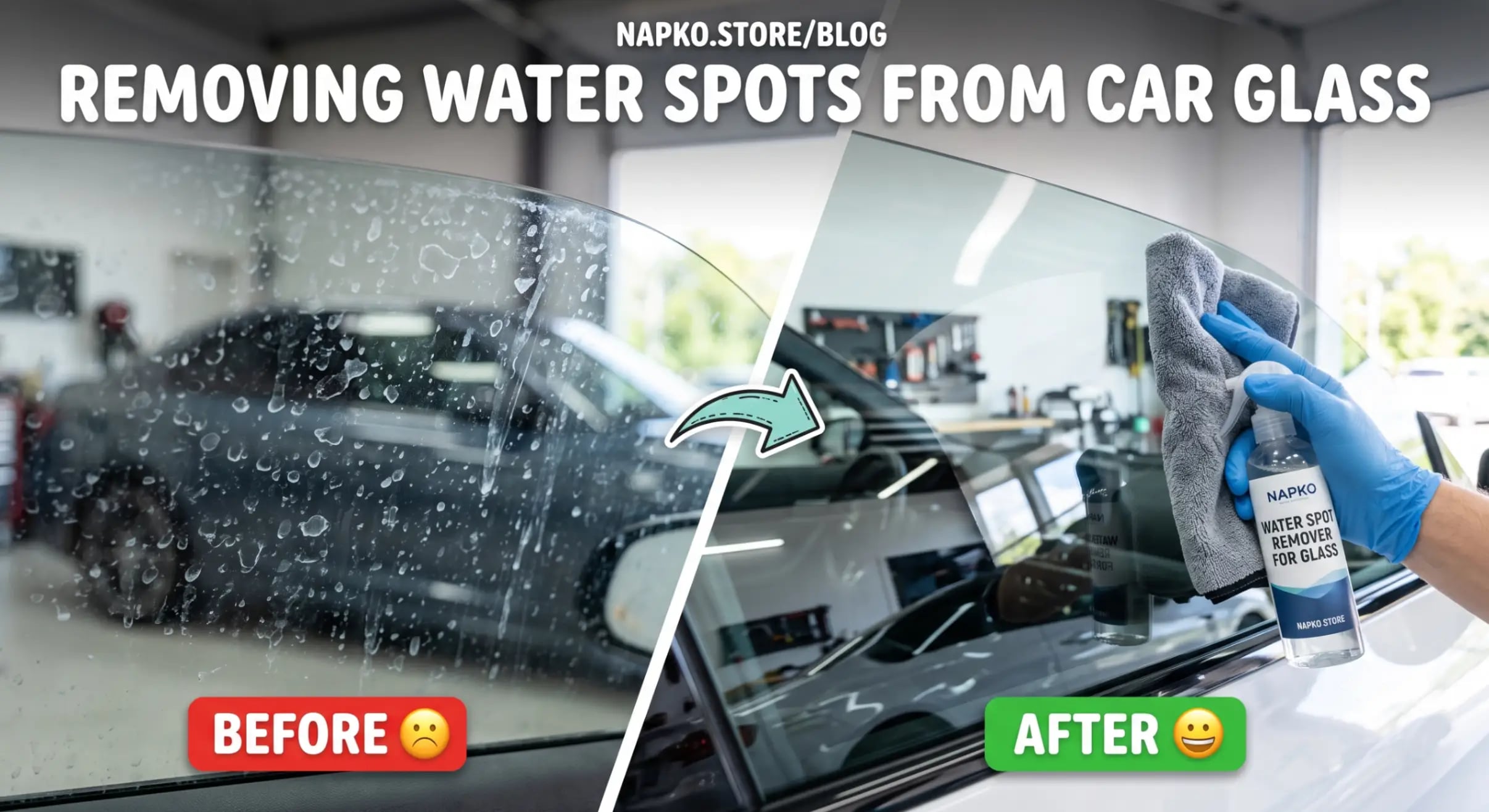
Water spots on your car glass can make an otherwise clean vehicle look dull and poorly maintained. More importantly, stubborn water stains on the windshield and windows can reduce visibility, especially when sunlight or headlights hit the glass.
If you've noticed white spots, cloudy patches, or mineral marks on your car windows after washing your vehicle, you're probably dealing with water spots caused by mineral deposits.
The good news is that most fresh water spots can be removed with the right cleaning technique. In this guide, we'll explain how to remove water spots from car glass, what causes them, which cleaning methods work, and how you can prevent them from coming back.
What Causes Water Spots on Car Glass?
Water spots usually appear when water droplets dry on the surface of your car glass.
The water itself may contain minerals such as:
Calcium
Magnesium
Silica
Other dissolved minerals
When the water evaporates, these minerals can remain behind and form visible spots or stains.
Common causes include:
Hard water
Washing your car and allowing it to air-dry
Rainwater drying on the glass
Sprinkler water
Poor-quality car washing water
Not drying the vehicle after washing
Mineral deposits building up over time
Fresh water spots are usually easier to remove. If mineral deposits remain on the glass for a long time, they can become much more difficult to clean.
How to Remove Water Spots from Car Glass
Before trying aggressive cleaning methods, start with the gentlest option. This helps reduce the risk of scratching or damaging the glass.
1. Wash the Glass First
Start by removing loose dirt, dust, and road grime.
Use clean water and a car-safe glass cleaning solution. Rinse the glass thoroughly before attempting to remove the water spots.
This step is important because rubbing dirty glass can move dirt particles across the surface and potentially cause fine scratches.
2. Use a Dedicated Automotive Glass Cleaner
A good automotive glass cleaner can help remove light water spots, fingerprints, road film, and other surface contamination.
Spray the cleaner onto a clean microfiber towel or directly onto the glass according to the product instructions.
Then:
Wipe the glass using straight or overlapping movements.
Pay extra attention to areas with visible spots.
Use a separate dry microfiber towel to buff the glass.
Check the glass from different angles.
For fresh water spots, this may be enough to restore a clear finish.
3. Try a Vinegar Solution for Light Mineral Deposits
White vinegar contains acetic acid, which can help dissolve certain mineral deposits.
For light water spots, you can make a simple cleaning solution by mixing equal parts white vinegar and water.
Apply the solution to a microfiber cloth and gently work on the affected area.
Important:
Do not allow the solution to sit on the vehicle unnecessarily. After cleaning, rinse or wipe the glass thoroughly with clean water and dry it.
Avoid using vinegar on painted surfaces, rubber trim, or other materials unless the product manufacturer specifically states that it is safe.
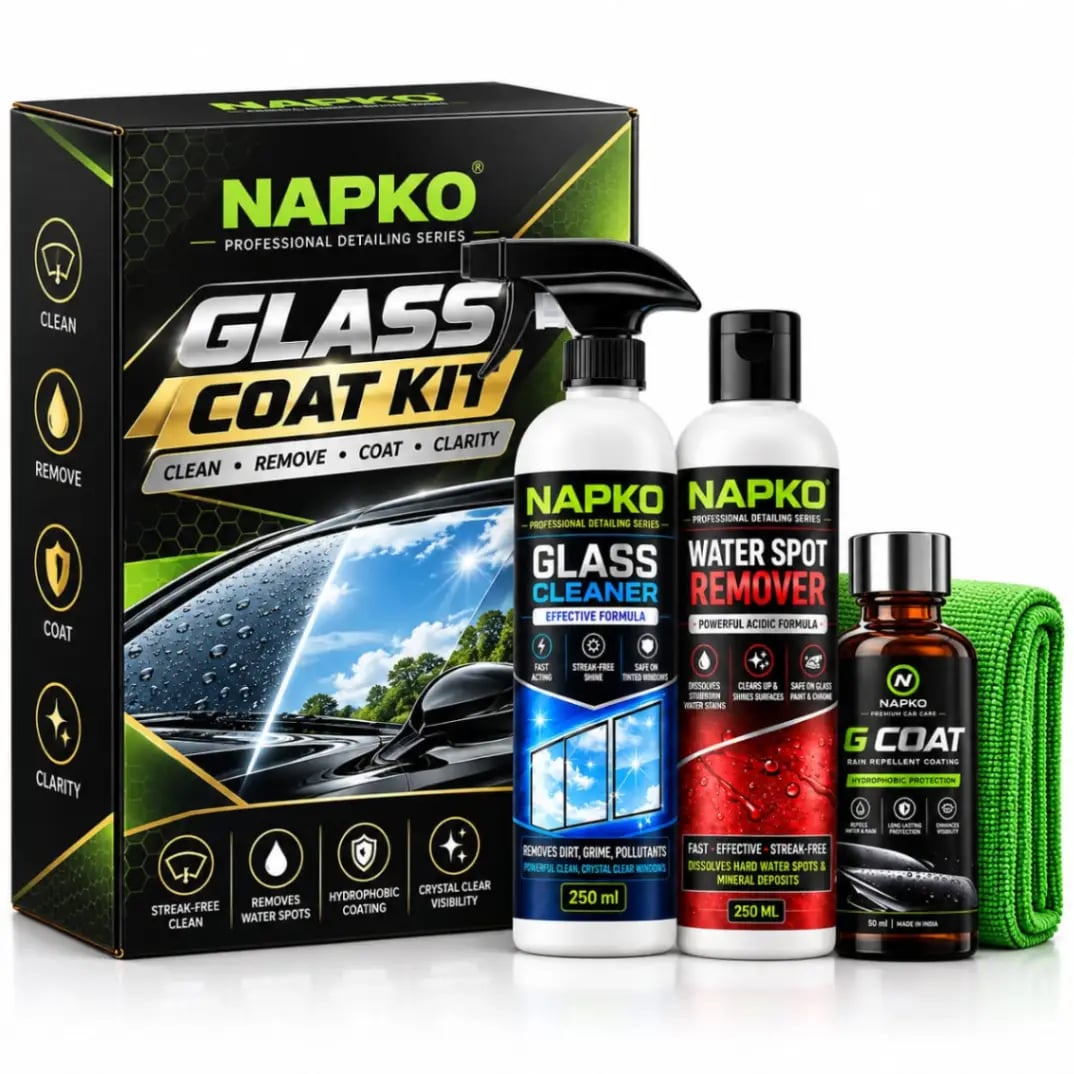
4. Use a Water Spot Remover for Stubborn Stains
If ordinary glass cleaner or a mild vinegar solution doesn't remove the spots, the mineral deposits may be more stubborn.
A dedicated automotive water spot remover or glass polish may be more appropriate.
These products are specifically designed to tackle mineral deposits and other stubborn contamination.
Always:
Read the product instructions.
Test the product on a small area first.
Use a clean microfiber towel or the recommended applicator.
Avoid excessive pressure.
Keep the product away from surfaces where it isn't intended to be used.
For severe deposits, professional glass polishing may be necessary.
5. Clean the Glass with a Microfiber Cloth
The cleaning cloth you use can make a significant difference.
A high-quality microfiber cloth helps pick up dirt and cleaning residue without leaving excessive lint behind.
For best results, use separate microfiber towels for:
Washing
Cleaning
Drying
Final glass buffing
Avoid using old towels or dirty cloths that may contain trapped dust and grit.
How to Remove Water Spots from a Windshield
The windshield requires extra attention because it directly affects your visibility while driving.
Start by washing the windshield to remove loose contamination. Then use an automotive glass cleaner and a clean microfiber cloth.
If water spots remain:
Apply a suitable water-spot remover or glass-cleaning product.
Work on a small section at a time.
Follow the product's recommended dwell time.
Gently wipe the area.
Remove any residue.
Dry the windshield completely.
Inspect it under natural or bright light.
After cleaning, check the windshield from the driver's seat. A glass surface may look clean from outside but still show streaks or haze when viewed through direct sunlight.
Can Toothpaste Remove Water Spots from Car Glass?
You may find DIY methods online recommending toothpaste for removing water spots from glass.
While mild abrasives can sometimes help with certain surface deposits, toothpaste is not specifically formulated for automotive glass and different formulations can contain different ingredients.
For regular car care, it is generally better to use a product designed specifically for automotive glass or water-spot removal.
If you decide to experiment with any DIY method, test it on a small, inconspicuous area first.
Can Baking Soda Remove Water Spots from Car Glass?
Baking soda is another commonly suggested home remedy.
However, baking soda is mildly abrasive. Using abrasive materials incorrectly can potentially leave fine marks or create additional cleaning problems.
For this reason, a dedicated automotive glass cleaner or water-spot remover is generally a more controlled option.
What Should You Avoid When Removing Water Spots?
Not every cleaning method is suitable for car glass.
Avoid:
❌ Abrasive scrubbers
Steel wool, rough sponges, or other abrasive materials can potentially scratch glass or damage surrounding surfaces.
❌ Excessive pressure
Hard scrubbing doesn't necessarily make cleaning faster. It can instead increase the risk of scratching contaminated surfaces.
❌ Household cleaners without checking compatibility
Some household cleaning products aren't designed for automotive surfaces and may affect rubber, plastic, coatings, or other materials.
❌ Cleaning under direct sunlight
Hot glass can cause cleaning products to dry too quickly, leaving streaks and making the job more difficult.
❌ Dirty microfiber towels
A dirty towel can spread contamination rather than remove it.
How to Prevent Water Spots on Car Glass
Preventing water spots is easier than repeatedly removing stubborn deposits.
1. Dry Your Car After Washing
One of the simplest ways to prevent water spots is to avoid allowing water droplets to naturally evaporate on the glass.
After washing your car, dry the windows and windshield with a clean microfiber drying towel.
2. Use Clean Water
If possible, use filtered or treated water for the final rinse. Water with a high mineral content can contribute to mineral deposits.
3. Don't Let Sprinkler Water Dry on Your Car
Sprinkler water can contain minerals that leave noticeable deposits.
If your vehicle gets sprayed by a sprinkler, rinse the glass and dry it as soon as possible.
4. Clean Your Glass Regularly
Regular cleaning prevents contamination from building up.
Instead of waiting until the windshield becomes heavily stained, include the glass in your normal car-care routine.
5. Consider a Glass Protection Product
After thoroughly cleaning the glass, you can consider applying a suitable automotive glass protection product.
Depending on the product, glass protection can help water bead and roll away more easily, potentially making future maintenance easier.
Always follow the manufacturer's preparation and application instructions.
Water Spots vs. Etching: What's the Difference?
Not every mark on car glass is simply a removable water spot.
Water spots
These are typically mineral deposits left behind after water evaporates. They may be removable with appropriate cleaning products.
Glass etching
If mineral deposits or acidic contaminants remain on the glass for a long time, they can potentially damage or etch the surface.
Signs that you may be dealing with etching include:
Marks that remain after thorough cleaning
Circular or cloudy patterns that appear embedded in the glass
Surface imperfections visible under different lighting
Persistent stains that don't respond to normal glass cleaners
If cleaning doesn't remove the marks, professional glass polishing may be required.
How Often Should You Clean Your Car Glass?
There isn't one fixed schedule for every vehicle.
However, you should clean your exterior glass whenever you notice:
Water spots
Road film
Dust buildup
Bird droppings
Greasy residue
Reduced visibility
Streaking
If you frequently park outdoors, drive in dusty conditions, or live in an area with hard water, your glass may require more frequent cleaning.
Quick Method: Remove Water Spots from Car Glass
Here's a simple process you can follow:
Step 1: Park the car in a shaded area.
Step 2: Wash the glass to remove loose dirt and dust.
Step 3: Apply a suitable automotive glass cleaner.
Step 4: Wipe using a clean microfiber towel.
Step 5: For stubborn mineral deposits, use an appropriate water-spot remover.
Step 6: Wipe away the residue completely.
Step 7: Dry the glass with a clean microfiber towel.
Step 8: Inspect the glass from different angles.
Step 9: Apply suitable glass protection if required.
Final Thoughts
Water spots may look like a small cosmetic problem, but heavily contaminated car glass can affect both the appearance of your vehicle and driving visibility.
The safest approach is to clean water spots early, use products designed for automotive glass, avoid aggressive scrubbing, and dry your vehicle properly after washing.
For stubborn stains that don't respond to normal cleaning, a dedicated water-spot remover or professional glass polishing may be necessary.
Keeping your windshield and windows clean doesn't have to be difficult. With the right cleaning products, microfiber towels, and a consistent car-care routine, you can keep your car glass cleaner, clearer, and easier to maintain.
Looking for car-care products to keep your vehicle clean? Explore the automotive cleaning and detailing products available at Napko.store.